|
|
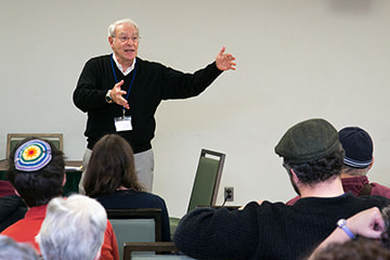
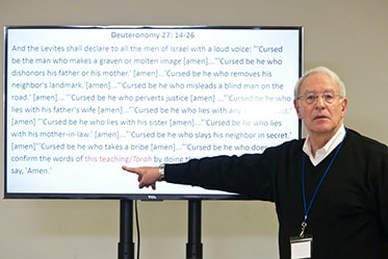
Rabbi Klein teaches each year September- May
in the Federation's JLearn Adult Education Program.
For registration information and course fees
(248) 205-2557 • E-MAIL: [email protected] or go to https://thejdetroit.org/culture-education/jlearn/
Fall 2024
Reading Genesis Again For The First Time (Zoom, Eight Weeks beginning November 1)
The Book of Genesis has for too long been wrongly transmitted as Sunday School stories. And because we tell these stories to children, we assume that they were meant for children. But the truth is that these are sophisticated, extremely well-written and sophisticated narratives. The course will introduce the Documentary Hypothesis, recognizing that the final version was meant to be read as a unified text.
Winter 2025
The Book of Exodus: Text and Texture (Zoom, Eight Weeks beginning January 17)
This course will be a close and careful reading of the better-known Exodus narratives and their rabbinic and modern commentaries. The class will incorporate a discussion of the Documentary Hypothesis as a means of better understanding the purpose and intention of this foundation text of Torah, as well as presentation of what archaeology and Egyptology can teach about its historicity.
Spring 2025
Reading the Prophets (Zoom, Six Weeks beginning May 2)
We know their names and many of their quotations. This course will examine the best known of the Biblical Prophets, their histories, the context of their messages, and who in fact they really were. Rabbi Klein will place them within the historical reality of the Biblical narrative, suggest how their messages would have been received then, and what they can mean for us today.
Grosse Pointe Jewish Council
2024 Summer Series -- "American Judaisms"
The American Jewish experience is expressed through a diverse variety of “Judaisms”, all of which have developed from the monolithic, rabbinic Judaism that existed prior to the 18th C Haskalah (Jewish Enlightenment), and each of which affirms its own authenticity. This series will examine the development and modern expression of the following American Judaisms: Modern Orthodox and Chasidic; Conservative and Reconstructionist; Reform and Humanist.
2024 Summer Series -- "American Judaisms"
The American Jewish experience is expressed through a diverse variety of “Judaisms”, all of which have developed from the monolithic, rabbinic Judaism that existed prior to the 18th C Haskalah (Jewish Enlightenment), and each of which affirms its own authenticity. This series will examine the development and modern expression of the following American Judaisms: Modern Orthodox and Chasidic; Conservative and Reconstructionist; Reform and Humanist.
Rabbi Klein is Adjunct Professor at Oakland University and Rochester Christian University
The Book of Genesis, Rochester Christian University, Fall Semester 2024
The Book of Genesis, Oakland University, Fall Semester 2024
Introduction to Judaism, Rochester Christian University, Fall Semester 2024
Introduction to Judaism, Oakland University, Winter Semester 2025
The Book of Genesis, Rochester Christian University, Fall Semester 2024
The Book of Genesis, Oakland University, Fall Semester 2024
Introduction to Judaism, Rochester Christian University, Fall Semester 2024
Introduction to Judaism, Oakland University, Winter Semester 2025